


Restoring Colorado’s Cache la Poudre River Watershed Through Community Collaboration
Introduction by Melissa Basta
When most people think about restoring a landscape after wildfire, they picture planting trees or rebuilding trails. Few would imagine that one of nature's greatest restoration experts is a beaver.
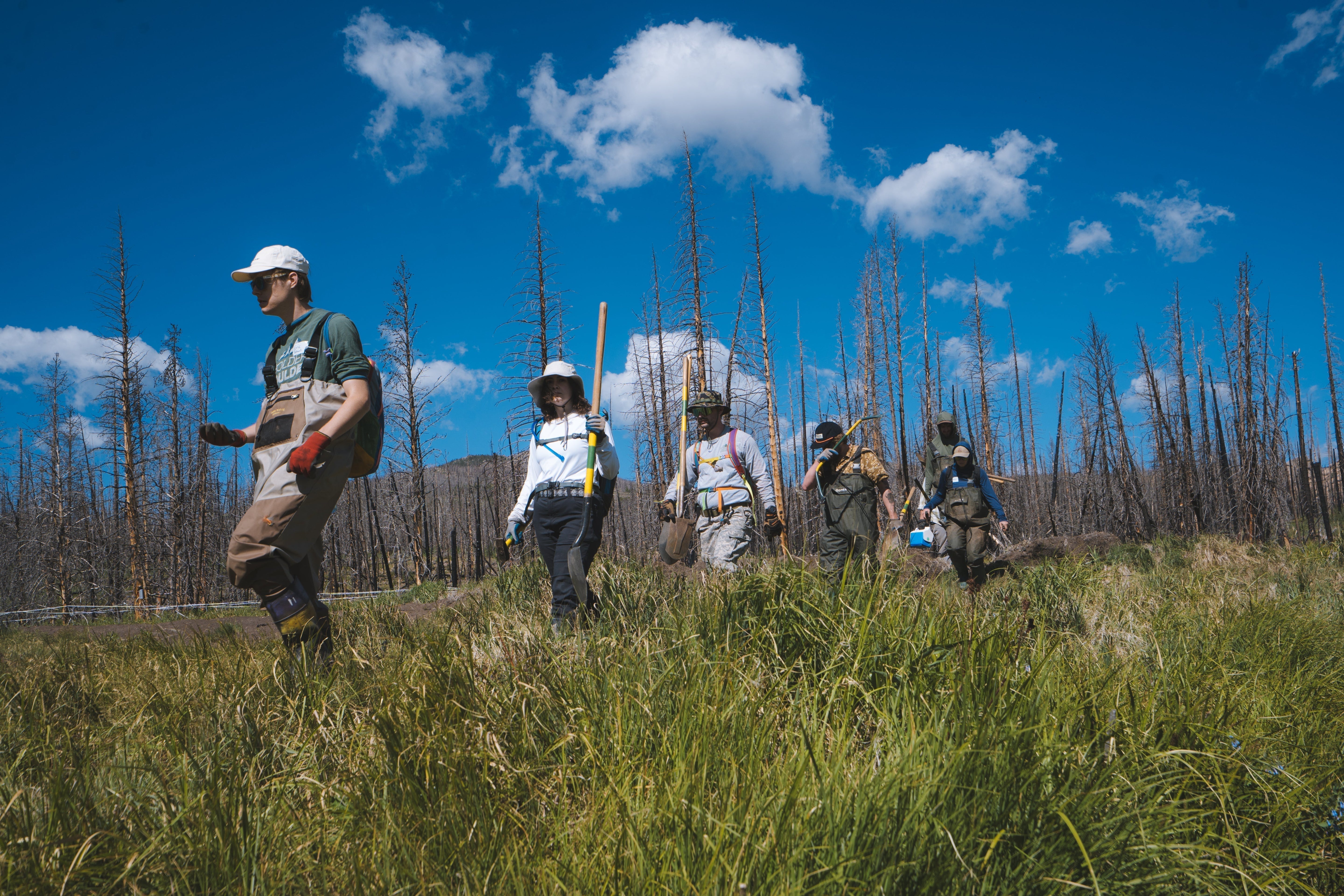
After our team volunteered with the Coalition for the Poudre River Watershed (CPRW) and Wildlands Restoration Volunteers in the Cameron Peak burn scar in June, we left with a deeper appreciation for how healthy watersheds function, why beavers are among nature's greatest ecosystem engineers and how community partnerships can help landscapes recover after wildfire. We’re incredibly proud to be part of this project and invited our partners at CPRW to share the story behind this restoration work and why bringing back the beaver may be one of the most powerful tools we have for creating a more resilient Colorado.
Restoration After the Cameron Peak Fire
By Megan Maiolo-Heath
It's easy to think of wildfire recovery after a fire as something that wraps up once the smoke clears and news coverage ends. The reality is very different.
The Cameron Peak Fire ignited in August 2020 near Cameron Pass in the upper Poudre River Watershed and by the time it was contained that December it had burned nearly 209,000 acres, making it the largest wildfire in Colorado's recorded history.
Hydrologists studying the burn scar determined that the watershed won’t bounce back by itself because of the severity of the wildfire. The fire stripped away vegetation and altered the soil so significantly that when rain or snowmelt hit the burned hillsides, water ran off faster and carried away far more sediment and ash than it would have if the forest was healthy. That's why we’ve experienced mudslides, road closures and periodic water-quality problems serious enough to force nearby cities to shut off their river intakes. Researchers estimate that a watershed this severely burned needs roughly a decade to recover its normal hydrology.
That's the backdrop for this restoration effort. Years after the flames were extinguished, the Poudre Watershed is still healing. Organizations like CPRW are working on one stream, one meadow and one sub-drainage at a time to help the landscape recover.
Why Beavers Matter
Beavers are considered a keystone species and an ecosystem engineer. Their activity reshapes the environment in ways that ripple out to benefit dozens of other species. In many ways, beavers do naturally what restoration crews are working so hard to recreate: slow water, rebuild wetlands and create healthier, more resilient landscapes.
When a beaver dams a stream, it slows down the water and spreads it across a floodplain instead of letting it rush downhill in a single narrow channel. Beaver dams create ponds and wetlands, recharge groundwater and raise water tables in the surrounding soil. These natural dams create greener, spongier landscapes that hold water longer into the dry season, cool stream temperatures for fish, and foster habitats for everything from amphibians to songbirds. In fire-prone regions, beaver-created wetlands can even act as natural firebreaks — areas that stay green and damp when everything around them is tinder-dry.
Bringing beaver activity back to a watershed is one of the most effective, low-cost tools available for restoring stream health at scale.

Weekend Restoration Work
The Upper Elkhorn Creek restoration project unfolded over two days, with each day focused on the same goal: helping the watershed function more like it did before the fire.
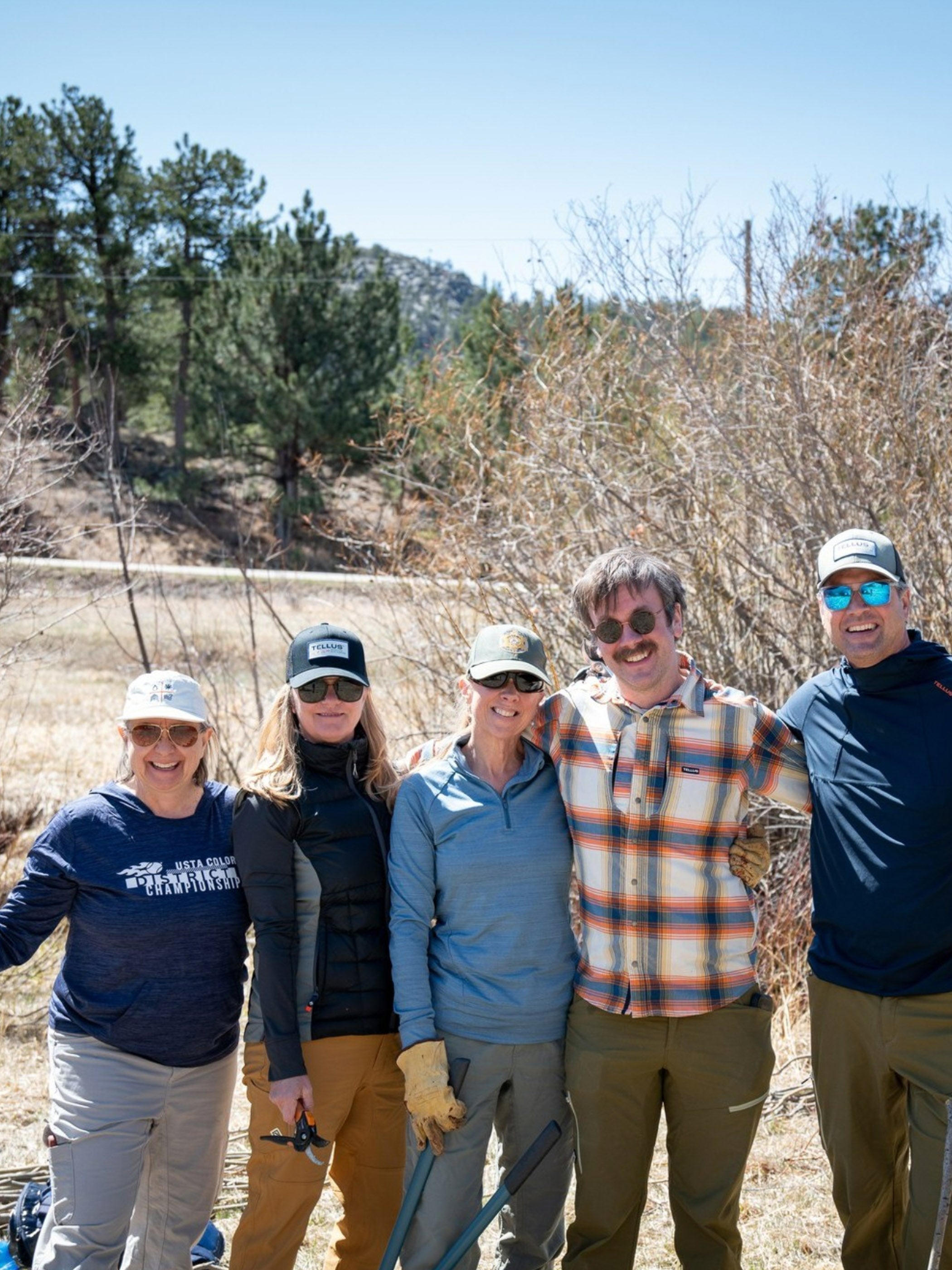
Friday was about fire mitigation on private land in Glacier Vier near the restoration site. This work included thinning overgrown and fire-prone vegetation to reduce the risk of future fires. Those freshly cut materials known as "slash" were then delivered to the Upper Elkhorn Creek site where they were an essential part of Saturday’s restoration work.
Saturday shifted to the instream work. Using the green slash from the wildfire mitigation project, 40+ volunteers, including staff from Tellus, hand-built beaver dam analogs (BDAs) and post-assisted log structures (PALS) in an abandoned beaver meadow on the Upper Elkhorn Creek. While the science behind this project is sophisticated, building these structures is very low-tech. Posts are driven into the streambed while woven branches, sod and packed sediment are built up around them. Together, the volunteers recreated the work that beavers have been performing for thousands of years. The project is designed to:
- Improve water quality and ecological functioning by providing opportunities for sediment storage, nutrient uptake and enhanced aquatic and riparian habitats.
- Improve stream processes in Elkhorn Creek that align with downstream Wild and Scenic recreation, aesthetic, fisheries and aquatic habitat values in the Cache la Poudre River.
- Use process-based restoration techniques that meet the project objectives.
Bigger Ecological Impact
A single BDA looks modest. Their strength comes not from one structure, but from many working together across an entire stream reach. Strung together along an entire stream or river, these man-made structures start to do exactly what real beaver dams do. They slow water, force streams to spill back onto their floodplains and trap sediment that would otherwise wash downstream into municipal water supplies already stressed by the fire.
Within a few years of installation, BDA projects built elsewhere in the West have seen groundwater tables rise by more than a foot, streamside vegetation rebound by roughly a third, and hundreds of feet of channelized stream reconnected to its floodplain. Other sites have also experienced reductions in downstream sediment and waterborne pathogens as water is forced to filter slowly through the structures rather than rushing past.
Just as important, BDAs are designed to be a head start rather than a permanent fix. The goal is for real beavers to eventually move back in, take over dam maintenance and expand the network of ponds and wetlands on their own. In a landscape still recovering from the largest fire in state history, that kind of long-term, self-sustaining resilience is exactly what the watershed needs.

Why Partnerships Matter
None of this work is possible with one organization working alone. CPRW brings scientific expertise, facilitates collaboration across public and private boundaries, and fosters landowner trust that’s needed to identify the right sites where the work will actually hold up. Volunteers bring the passion and the labor that make hand-built, low-tech restoration possible. And companies like Tellus bring awareness, financial resources, volunteers and a genuine stake in keeping the places people love to explore healthy enough for continued exploration.
Watershed recovery from a fire this size isn't a weekend project, it's a decade-plus effort playing out one reach of stream at a time. Projects like this one are proof that when local businesses, nonprofits, government agencies and volunteers show up together, this kind of long, slow work moves a little faster and is much more impactful.
Looking Ahead
Restoring the Cache la Poudre River Watershed is a long-term commitment. Whether you volunteer on a restoration project or support CPRW's work, every effort helps restore the landscape for future generations. The hope is that one day, the greatest measure of success won't be the beaver dam analogs we built. It will be the sight of beavers in the meadow once again, quietly doing the work they've done for thousands of years: slowing the water that builds healthy wetlands and watersheds for all.
Dive into information about CPRW:
- The Coalition for the Poudre River Watershed plays a unique role as a community-based watershed group
- A new federal report explains how restoring streams, beavers and wetlands could be one of our most powerful tools for fighting wildfires
- From Emergency Response to Long-Term Resilience: Managing Watersheds That Are Ready for Fire
- CPRW Corporate Partners Program
Upcoming CPRW projects:
- Upper Elkhorn Creek - Adaptive Management (completed June 27-28)
- South Fork of the Poudre - Adaptive Management (in progress)
- Elkhorn Creek at Dall - Post-Fire Stream Restoration (in progress)
- Elkhorn Creek at the Scout Ranch - Stream Restoration (August 2026)
- Laramie River Channel Resiliency Project - Post-Fire Stream Restoration (July-August 2026)
- Sheep Creek at Zimmerman - Post-Fire Stream Restoration (Sept-Oct 2026)
Your Ultimate Travel Companion: Tellus Duffle Bags
Designed in Colorado. Built for Adventure.